Flooring Installation in Moon Township, PA
Flooring Installation and Repair in Moon Township, PA
Handled Home installs luxury vinyl plank (LVP), laminate, and hardwood flooring. Serving Moon Township, Coraopolis, Robinson, and Sewickley, plus Beaver County and surrounding Greater Pittsburgh communities. We handle full room installs, replacing damaged sections, transition strips, stair nosing, squeaky subfloor fixes, and flooring work after water damage repairs — the kind of hands-on, room-ready flooring work a skilled handyman does well. Whether you need a full room install or a single repair, our flooring services cover everything from subfloor prep to the finished edge.
On desktop? Call or text directly at 412-353-5341.
Professional Flooring Installation and Repair
Handled Home provides professional flooring installation and repair as part of our handyman and home-improvement services. We install LVP, laminate, and floating hardwood flooring, repair damaged sections, install transitions and stair nosing, and address minor subfloor issues before installation.
What we don't do: carpet installation, or ceramic or porcelain tile installation. If your project falls into one of those categories, we'll tell you upfront rather than take on work that's outside our scope.
Recent Flooring Work — Moon Township
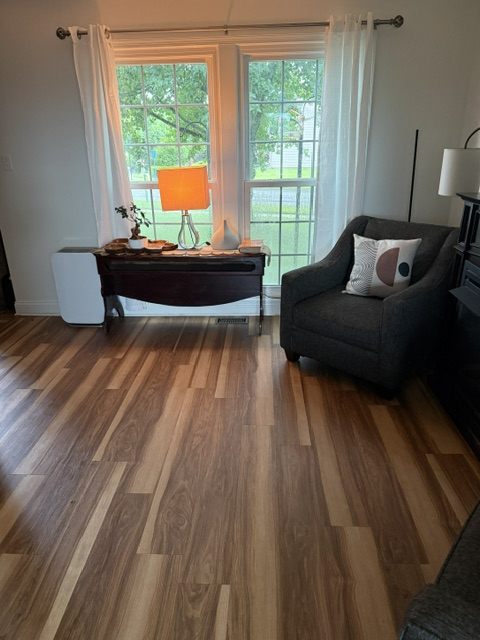
A recent luxury vinyl plank (LVP) install we completed in a Moon Township living room — warm wood-look planks laid wall to wall with a clean finish at the baseboards.
What Types of Flooring We Install
We install floating floor systems and nail-down hardwood — the three most common residential flooring types across Moon Township and the Pittsburgh area.
Luxury Vinyl Plank (LVP)
100% waterproof, durable, and forgiving of minor subfloor imperfections. The right call for kitchens, basements, laundry rooms, and any room that sees moisture or temperature swings. Pittsburgh's climate makes LVP the smart default for most rooms.
Get Estimate →Laminate Flooring
A cost-effective floating floor with a realistic wood look — great for bedrooms, living rooms, and home offices that stay dry and climate-controlled. We install with proper expansion gaps and the right underlayment so it holds up long-term.
Get Estimate →Hardwood Flooring
Solid and engineered hardwood installation for living rooms, dining rooms, bedrooms, and main floor areas. We install nail-down and floating hardwood, handle transitions and base trim, and make sure the subfloor is properly prepped before the first plank goes down.
Get Estimate →Note: We do not install carpet, ceramic tile, or porcelain tile. If you need one of those, we'll point you toward the right specialist rather than take on work that isn't in our wheelhouse.
Common Flooring Projects We Handle
Most flooring calls we get fall into one of these categories. If yours doesn't fit neatly — call or text and we'll tell you honestly whether it's a good fit.
Room-by-Room Installs
Single room or multi-room flooring projects — bedroom, living room, home office, finished basement, hallway, or open-plan main floor. We plan the layout before the first plank goes down, account for doorways and closets, and finish every edge cleanly. Most single rooms are done in one day. Multi-room projects we'll schedule and timeline honestly before we start.
Replacing Damaged Sections
A few planks buckled from moisture, cracked under furniture, or got damaged during a repair — we can replace the affected section if the material is still available. This is common after a plumbing leak or water damage repair, where a limited area of flooring was pulled up and needs to go back down. We match the existing floor as closely as possible and blend the seam cleanly.
Transition Strips & Thresholds
Missing, broken, or mismatched transitions between rooms are one of the most common finish complaints in homes that have had flooring updated piecemeal over the years. We cut and install T-moldings, reducer strips, end caps, and thresholds at every doorway and surface change — the right profile for each situation so the floor reads finished rather than patched together.
Stair Nosing
If new flooring runs to a staircase landing or the top of stairs, stair nosing needs to be installed to cap the edge and create a safe, finished transition. We cut and fit stair nosing to match the flooring material and secure it properly so it doesn't shift underfoot over time.
Squeaky Subfloor Fixes
Installing new flooring over a squeaky subfloor doesn't silence the squeak — it transmits right through. Before flooring goes down we address subfloor movement: driving screws to pull the subfloor tight to the joists, gluing down loose panels, and securing any soft or bouncy spots. A quiet subfloor is the foundation the finished floor depends on. Read more: How to Fix Squeaky Floors →
Flooring After Water Damage Repairs
After a leak, flood, or moisture event is fixed, the flooring that was pulled up or damaged still needs to go back down. We handle the flooring portion of the recovery: subfloor assessment, replacing damaged sections, and installing new LVP or laminate over a dry, solid base. We work with homeowners and insurance situations and can coordinate around other repair trades when needed.
Matching Existing Floors
After a repair — drywall, plumbing, whatever — the flooring in that area often needs to be matched or blended back in. We take care with material matching, seam placement, and plank direction so the repair area doesn't read as obviously patched. We'll tell you upfront if a perfect match isn't achievable and discuss options before starting.
Baseboard & Quarter Round Finish
New flooring changes the reveal at the base of the wall. We remove existing baseboards when needed, reinstall them after the floor is down, and add quarter round or base shoe where the gap at the wall edge needs to be covered. Every room gets finished all the way to the walls — not just the open floor area.
LVP, Laminate, or Hardwood — Which Is Right for Your Room?
Three good options. The right call depends on the room, the moisture situation, and how long you plan to stay in the home.
Choose LVP For…
Kitchens, basements, laundry rooms, bathrooms, and any room with regular moisture exposure. LVP has a 100% synthetic core — it's genuinely waterproof, not just water-resistant. Pittsburgh summers are humid, Pittsburgh basements can be damp, and LVP handles both without buckling at the seams. If you're not certain a room will stay dry year-round, LVP is the lower-risk choice.
Choose Laminate For…
Bedrooms, living rooms, dining rooms, and home offices that stay consistently dry and climate-controlled. Laminate has a wood-fiber core that gives it a slightly more solid, authentic feel underfoot — but that core will swell if it gets wet repeatedly. For rooms you're confident will stay dry, laminate is a cost-effective option that looks great and holds up well.
Choose Hardwood For…
Living rooms, dining rooms, bedrooms, and main floor areas where you want the real thing — a floor that can be refinished, adds resale value, and holds up for decades. Hardwood is not waterproof and isn't the right call for basements or moisture-prone rooms, but in the right space it's a durable, premium choice that ages better than synthetic products. Read more: Hardwood vs. LVP — Which Is Better for Pittsburgh Homes? →
The Pittsburgh Factor
Pittsburgh's seasonal humidity swing matters more than most homeowners account for. LVP handles it completely. Laminate holds up well in dry rooms but fails in damp ones. Hardwood needs proper acclimation and expansion gaps — installed correctly in the right room, it performs excellently. For below-grade rooms: LVP, every time. Read more: Best Flooring for Pittsburgh Basements →
Common Flooring Projects in Moon Township & Surrounding Areas
- LVP installation in kitchens and finished basements
- Laminate flooring in bedrooms and living rooms
- Hardwood installation in living rooms, dining rooms, and main floors
- Replacing worn carpet with LVP, laminate, or hardwood
- Damaged plank replacement after water damage
- Transition strip installation between rooms
- Stair nosing installation at landings
- Squeaky subfloor repair before new flooring install
- Flooring in home offices and guest rooms
- Matching existing floors after repairs
- Baseboard removal, reinstall, and quarter round
- Threshold installation at exterior doors
- Move-in and punch-list flooring work
Flooring FAQs
Do you supply the flooring or do I?
You supply the flooring — you purchase the product you want and we install it. That way you choose the brand, style, and color without us marking it up. The one thing to plan for: have 10–15% extra material on site above the measured square footage to account for cuts, waste, and future repairs. We'll confirm the quantity looks right before we start. If you'd like product recommendations before you buy, text us the room dimensions and we're happy to suggest options.
Can you match existing floors?
Often, yes — but it depends on the situation. If the existing flooring is a current product still in production, finding a match is usually straightforward. If it's a discontinued product, we look for the closest available match in color, texture, and plank width and discuss it with you before ordering. We'll always tell you honestly how close the match is expected to be rather than promise a seamless result and deliver something noticeably different. For larger damaged areas, replacing the full room with new flooring is sometimes the cleaner outcome than patching with a near-match.
How long does a room take?
Most single rooms — a bedroom, a home office, or a smaller living area — are done in one day, including subfloor prep and trim finish. Larger rooms or open-plan main floors may take a day and a half to two days depending on square footage and the number of doorways and transitions. Multi-room projects we schedule and timeline before we start so you know what to expect. The room needs to be clear of furniture when we arrive, and the flooring should be on site and acclimated for at least 24 hours per the manufacturer's specs.
Can you install flooring over existing flooring?
Sometimes. LVP over a flat, firmly-bonded existing vinyl is often doable if the added height doesn't create problems at doorways and transitions. Installing over laminate that's already floating, or over carpet, is not something we recommend — the floating floor needs a solid, stable base. Send us photos and we'll give you a straight answer for your specific situation before you commit to the approach.
Do you move furniture as part of the job?
The room should be clear when we arrive — furniture moving is not automatically included. If you have specific large pieces you need help with, let us know before scheduling so we can discuss it and account for the time. We want to avoid showing up to a room that isn't ready, which pushes the whole job and wastes both our time and yours.
Do you fix squeaky floors before installing new flooring?
Yes, and we specifically look for subfloor movement before the new floor goes down. A squeak that exists under old flooring will transmit through new flooring if it's not addressed first. We drive screws to pull the subfloor tight to the joists, glue loose spots, and make sure the surface is flat and quiet before installation starts. It's worth the extra time upfront.
Flooring Installation in Moon Township and Nearby Communities
Most of the flooring work we do in Moon Township, Coraopolis, Robinson, and Cranberry Township falls into a pattern: homeowners who've lived with original builder-grade carpet or outdated vinyl long enough to want something better, and homeowners who had a water event or repair that left a section of floor that needs to be replaced or matched. Both are practical, scoped jobs that don't require a full flooring crew — they require someone who shows up, assesses the subfloor properly, installs cleanly, and finishes every edge before leaving.
In Cranberry Township and Robinson, we see a lot of newer construction where builder carpet is being replaced with LVP in main living areas and basements, or hardwood in dining rooms and main floors. The same is true in North Fayette Township, where the I-79 corridor subdivisions have a similar housing profile — newer builds where homeowners are ready to upgrade past what came with the house. In Moon Township and Coraopolis, the housing stock is older and subfloors sometimes need more prep work — staples from old carpet, uneven spots, or soft sections that need to be addressed before anything goes down. We check all of that before the first plank is installed, not after.
Homeowners just across the line can reach us for flooring installation in Robinson Township too — it's minutes from our Moon Township base. If you have a flooring project — a full room, a repair, or a few transitions that need replacing — reach out for a free estimate. Text photos of the room and existing floor to 412-353-5341, or fill out the form below.
Related Services
New floors change what the trim and doors need. These usually go together.
- Baseboard & Molding Installation — Base and quarter round back on cleanly once the floor is down.
- Door & Trim Repair — Doors undercut or adjusted to clear a new floor height.
- Drywall Repair — Wall damage along the base, easiest to fix with the trim off.
- Interior Painting & Touch-Ups — Painting before the new floor goes in saves the cleanup after.
Request a Flooring Installation Estimate
Fill out the form below and we'll get back to you quickly. Or call/text us directly at 412-353-5341. Photos of the room and existing floor help us give you an accurate estimate.